Showing posts with label 3-Creativity. Show all posts

Monday, December 12, 2011

The Library Phantom


Articles by Robert Krulwich, art by Anonymous
http://www.npr.org/blogs/krulwich/2011/10/28/141795907/who-left-a-tree-then-a-coffin-in-the-library

The amount of detail and effort that went into each of these sculptures is breathtaking. Books are an unorthodox medium, and these displays exhibit a great deal of creativity.


Thursday, November 24, 2011

Gamification


http://gamification.co/
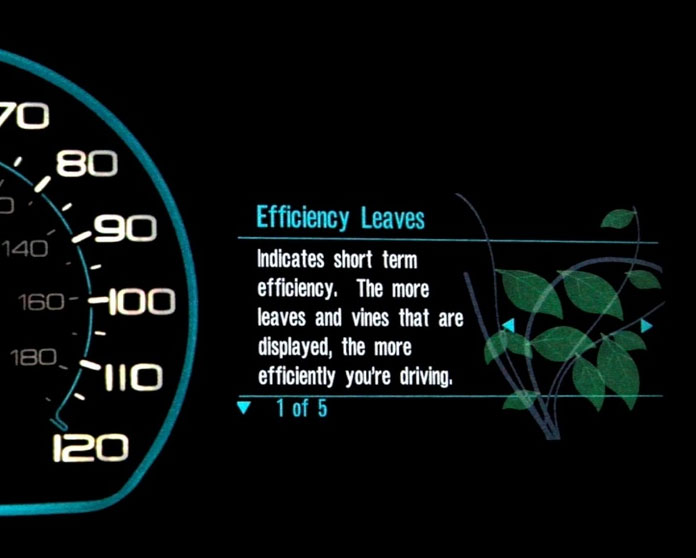
This video was my second exposure to the concept of gamification, after reading Jane McGonnigal's "Reality is Broken." The more I hear, and the more I think about the more convinced I am in the power of gamification. It is such an inspired idea to design the world around us to take advantage of the motivating power of games. For example, the video explains the Ford "EcoGuide" built into the dash of Ford hybrids, featuring a vine which grows when the car is driven in a way that conserves gasoline and shrinks when it is driven more aggressively.

The video also discusses a game called "Speed Camera Lottery," in which speed cameras do not only detect speeders and send them tickets, they also keep track of drivers who pass going under the speed limit. Speeders receive tickets, while everyone else is entered into a lottery to win the ticket fees. The psychology of games, as well as the partial reinforcement effect combine to make this method highly effective, dropping the average speed by 20% in areas where such speed cameras are installed. I was very intrigued by this concept because it so clearly shows what effective tools product and system design can be for social engineering.

Sunday, November 20, 2011

Joanna Blakely: Lessons from Fashion's Free Culture


In this TEDTalk, Johanna Blakely discusses the effect that the lack of copyright protection has had on the fashion industry. As "utilitarian" objects, clothing designs are not eligible for copyright in the US. Only brand logos are protected by law, so it is completely legal for counterfeiters to reproduce a design. While it is commonly believed that without ownership, their is no incentive to innovate, Johanna Blakely makes the opposite argument. Not only is there incentive to innovate, there is an increased incentive to innovate faster. It becomes necessary to stay ahead of the counterfeiters, and to design in a way that makes a product particularly difficult to copy. Designers strive to create designs as part of a certain aesthetic each season; these designs work best within this aesthetic. This is very similar to the world of comedy: jokes cannot be copyrighted, so comedians create an onstage persona to deliver their jokes- jokes that would not be as funny outside of this context.
All of this reminded me about the discussion of soft-soap dispensers during class. Copying is going to occur with copyright or patent protection of without, and in most cases litigation will not be the answer. Designers need to rely on ingenuity as much or more than they can rely on the law.

Saturday, November 12, 2011

Other Books and Articles

Martin Heidigger: "The Question Concerning Technology"

Michael Weinburg: "It Will Be Awesome if they Don't Screw It Up: 3D Printing, Intellectual Property, and the Fight Over the Next Great Disruptive Technology"

Malcolm Gladwell: "Outliers"

The Long Now: "10,000 Year Clock"

Sami Nerenberg: "Dimensions of Design"

"Dr. Michael Braungart on Material Shortages and Designing a New Material World"

Simon Lockrey: "The Design Response to a Wash of Green: Whole Systems and Life Cycle Thinking"


Wednesday, November 9, 2011

A Brief Rant on the Future of Interaction Design by Bret Victor

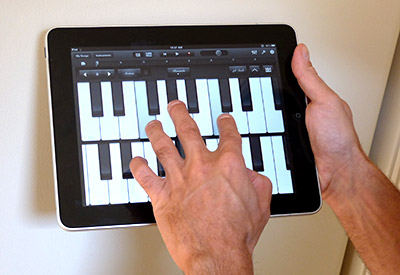
"Go ahead and pick up a book. Open it up to some page.

Notice how you know where you are in the book by the distribution of weight in each hand, and the thickness of the page stacks between your fingers. Turn a page, and notice how you would know if you grabbed two pages together, by how they would slip apart when you rub them against each other.

Go ahead and pick up a glass of water. Take a sip.

Notice how you know how much water is left, by how the weight shifts in response to you tipping it.

Almost every object in the world offers this sort of feedback. It's so taken for granted that we're usually not even aware of it. Take a moment to pick up the objects around you. Use them as you normally would, and sense their tactile response — their texture, pliability, temperature; their distribution of weight; their edges, curves, and ridges; how they respond in your hand as you use them.

There's a reason that our fingertips have some of the densest areas of nerve endings on the body. This is how we experience the world close-up. This is how our tools talk to us. The sense of touch is essential to everything that humans have called "work" for millions of years.

Now, take out your favorite Magical And Revolutionary Technology Device. Use it for a bit.

What did you feel? Did it feel glassy? Did it have no connection whatsoever with the task you were performing?"

Full Article:http://worrydream.com/ABriefRantOnTheFutureOfInteractionDesign/
This article was a unique look at human-centered design. Computer and electronic devices have been migrating to touch screen interfaces for the past decade, and it is generally assumed that this is the future of user interfaces. This article argues that our fingers are good for more than pointing at things, they are also good at feeling and manipulating things. If we are going to dream of ambitious future interfaces, we should aim for technologies that fully utilize our human capabilities.

Radiolab: Me, Myself, and Muse


http://www.radiolab.org/2011/mar/08/me-myself-and-muse/

The episode of Radiolab that this segment is taken from is all about making deals with yourself. In the clip above, Jad and Robert talk to psychologist Oliver Sacks and author Elizabeth Gilbert about their struggles with the creative process.
Oliver Sachs discusses a time when he was working on a book and was having a terrible time with writers' block. In keeping with the theme of the episode, he solved the problem by making an unimaginable bargain with himself: If he didn't finish in ten days, he would commit suicide. Though he is unable to say whether or not he would have actually gone through with it, this literal "deadline" as he describes it, created a powerful imagined threat that got him writing, first out of necessity then out of a creative well he had not known existed. He describes a "wonderful associative engine" in his head that made writing the book feel like taking dictation. This story was shocking but humorous and well-worthwhile look taking desperate measures to encourage creativity. It found an analog in the way one of my friends described her creative process- purposefully leaving projects until the last possible moment so that she has no chance to second-guess herself.

Next, Elizabeth Gilbert talked about her attempts to "live a lifetime of creativity without cutting your ear off." She described the anxiety she felt when working on a book to follow "Eat, Pray, Love" and her fears that she would never be able to surpass her first novel. She recounts interviewing Tom Waits who believed that there were different ways songs came into the world: "songs you have to sneak up on like hunting for a rare bird," "songs you find little bits of like pieces of gum under a desk," "songs that need to be bullied" This was the first time that she had ever thought of inspiration as an it, something that can be distanced from oneself and negotiated with. This is a radically different view of creativity than the prevailing wisdom, and was a neat idea to toy with.
get distance from it, negotiate with it


Radiolab

Radiolab has taught me about the power of designing experiences. Every segment is carefully edited and produced to bring the audience along on an adventure. It is hard to describe, but the sound design adds an entire dimension to the interviews and dialog and adds so much more than just music or traditional sound effects. The breathtaking attention to detail on the show results in a listener experience unlike any radio show I've ever heard.


Cities


The Good Show

Lost and Found

Desperately Seeking Symmetry

James Gurney: The Idea Monster


"Instead of just doing a straight architectural portrait, I wanted to come up with a clever idea for a fantastical sketch. But my mind went blank, as if some monster robbed all the good ideas out of my head. Then I thought: What if there actually was an Idea Monster that stole good ideas? It would sit blocking the road, and kidnap all the fresh, original ideas that came rolling along. It would let through only the stale, tired old clichés."
http://gurneyjourney.blogspot.com/2011/11/idea-monster.html

James Gurney is an artist whom I have admired since I read the book Dinotopia in elementary school- his illustrations are incredibly beautiful. I just learned this fall that he keeps a blog where he posts sketches and watercolors, and have been following it through my RSS reader ever since. In early November, he posted the image and the quote above, which I thought was a charming way to think about that moment when a great idea is on the very tip of your tongue, and then is snatched away at the crucial moment, or those days when, try as you might, only boring ideas seem to come.

Janet Echelman: Taking Imagination Seriously


There were many different elements of this video that coincided with design topics that I am interested in. The first was the idea of limitations leading to innovation. Janet Echelman was in India on a Fulbright scholarship and was supposed to hold an exhibition, but her paints never arrived. She was forced to try a different medium, and as the village she was in was had a large population of fishermen, she was inspired to try to create sculptures out of fishnet. Fishnet is now her primary medium, and she has created massive sculptures for cities all over the world.


Another element of the speech that I found very interesting was her description on the fusion of traditional crafts and technology and engineering that is needed to create each sculpture. These enoromous figures needed to be modelled before they could be constructed, and special computer simulation programs had to be created in order to bring these wonderful, organic shapes to realization.


I also was very interested in what she had to say about designing for nature. Most of her sculptures are outdoors and exposed to the elements, so wind is an important consideration in each design. Response to wind is modelled for each new sculpture, so that the wind can be used to animate the netting, causing fluid motion.


Poke the Box by Seth Godin

Poke the Box was a very short book, but it once again came back the many of themes explored by Sir Ken Robinson. It talks about how the only way to make a difference or to do something great is to take a risk- to poke the box and see what happens. It encourages readers to take the initiative to stand up for their ideas and move forward, working against the desire not to take risks that has been instilled in everyone since childhood. This is an important message that I struggle with, so I use this book as a sort of self-help: tiny doses of inspiration and encouragement when I need them.

Self-Assembly

This video was very interesting as it gives a peek into a possible future. It is possible that one day, humans will be designing machines or buildings that can construct and repair or even replicate themselves.
This article discusses further uses for self-assembly not touched upon in the video, including drug delivery mechanisms.

Thursday, October 13, 2011

Cognitive Surplus by Clay Shirkey

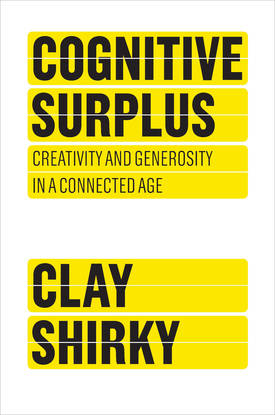
I waited for months for this book to be available from UB's library, and it did not disappoint. I was first introduced to Clay Shirky's work in my "Machine Culture" class in sophomore year. It was in the Digital Media Studies department and explored the intersections and interactions between machines, society, and culture, and it was probably my favorite class that I have ever taken.
"Cognitive surplus" is the free time and energy that each indivdual possess each day as a result of labor-saving devices and systems. Cars and planes decrease the time necessary for travel, washing machines and dishwasher free up time that would otherwise have been spent scrubbing... Most people have hours of free time on their hands every day because of things like these, but before widespread use of the internet most of this time was spent "consuming," watching television of movies, reading books or magazine articles, because normal people did not have access to the tools and distribution channels necessary to create. But all of that has changed, and Cognitive Surplus explores the world that this drastic change in paradigm makes possible. From Wikipedia and open-source software, to fan-subbing and fan-dubbing Japanese Anime communities, to the FoldIt protein game, the connectivity made possible by the internet has ripped the power of creation from the hands of the few and put it into the hands of the many.
This really showed me that anyone can be a designer now. Blender is completely free, and internet-order 3D printing is incredibly affordable- often around $100. Better yet, a MakerBot open source 3D printer is only around $1,500. Websites like Thingverse share the data files needed to print household objects such as cookie cutters, tape dispensers, toys, ornaments, jewelry: anything imaginable. It will be increasingly important for designers in the commercial realm to remember that they are no longer the only ones with access to the tools of creation and distribution.

Tuesday, September 20, 2011

Reality is Broken by Jane McGonnigal

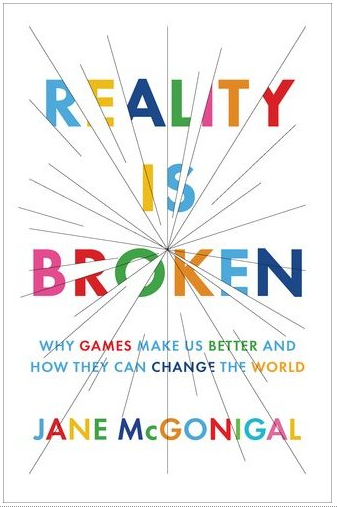
"Reality Is Broken" by Jane McGonigal was my introduction to the concept of Gamification. It definitely changed the way that I look at the world around me. Gamification seeks to reshape and redesign the world around us to more closely resemble a game, as games are one of the most powerful motivators. The book explores videogames such as FoldIt, a puzzle game in which users manipulate proteins and the data generated during gameplay is used in research on curing diseases such as cancer, HIV/AIDS, and Alzheimers, as well as a school in New York City that structures assignments as quests and adventures to keep the students interested and passionate about what they are learning. I find this concept absolutely fascinating because I think it has the potential to make enormous changes in our world, and that gamification as a concept will be embraced by many industries and organizations in the future as a crucial consideration in design.
The title of the book aludes to the current debates over the damage that video games have done to children's minds. Kids who play a lot of video games may have trouble focusing and staying interested in school, but Jane McGonigal makes the argument that it is not what is wrong with the children but what is wrong with the way we are trying to teach them. Children who watch television are used to passively receiving entertainment and information, but when playing video games, children are actively involved- they are making decisions, taking action, and receiving immediate feedback. Children then go to school and are expected to be little more than passive observers. When compared to psychological needs met by video games, reality IS broken.

Friday, September 16, 2011

What Technology Wants by Kevin Kelly


After an incredibly slow first few chapters, this book was one of the most interesting things I have ever read. I first heard about it during an episode of Radiolab on NPR, where the author gave an interview about the book. The basic premise is that there is an almost predetermined path to the march of technology: like evolution, there are certain events that are always going to occur. For instance, it is estimated that eyes have evolved in species independently forty times. Such an incredibly efficient and useful mechanism is always superior to the alternative, so it arises again and again. Much the same thing happens with technology, where inventors who are working independently, completely unaware of each other, develop the same technologies because it is an efficient and useful mechanism. In a way it was similar to the "Me, Myself, and Muse" episode of Radiolab (reviewed here), in that it explored the idea of concepts existing on their own, but reliant on humans to come to their full form.

Thursday, September 15, 2011

Sir Ken Robinson: Schools Kill Creativity

This video wasn't so much about design as creativity, and how we need to do a better job of encouraging and embracing it as a society. Sir Ken Robinson argues that we are educating children for a world that can only be imagined. We do not know what the future holds in the next five years, let alone the next sixty-five, so creativity should be as important as literacy; this is an idea that was also explored on the first day of MAE451.
Children are far more creative than adults; kids will take a chance, they are not yet afraid of being wrong or making a mistake. "If you're not prepared to be wrong, you'll never come up with anything original." In the current education system, however, in this country and throughout the developed world, children are discouraged from making mistakes. Public school were created to meet the needs of industrialization, but they continue to churn out workers for jobs that don't exist anymore. We no longer need students trained to be cogs in the machine; what we need now is to stop wasting children's talents and creative abilities because they will "never do that for a living."
I like this video's assertion that without mistakes, there is no originality because this is an issue that I often struggle with. I evaluate my ideas too quickly and too harshly because I am afraid to make a mistake, but this is a crippling habit that I have been working to overcome.