Friday, November 25, 2011

Interesting Design Problems

Bookcases
  • My book collection is currently housed in two IKEA Billy bookcases, but I had an incredibly difficult time finding bookcases that I was satisfied with. Before trying IKEA, all of the options that I was able to find were made of very poor quality particle board, had very short shelves, had a lot of needless flourishes, were low capacity, were outrageously expensive, or were incredibly ugly. Only the cheap bookcases seemed as if they had been made to hold books; more expensive bookcases were clearly just for show and form most certainly did not follow function. The Billy bookcase is very plain, simple and clean, with shelves long enough (and strong enough) to fit several thick books on each one. I do love them, but they are far from perfect and I am still seeking a more elegant, effective bookcase.

Storage and Furniture
  • I am intrigued by custom-designed, purpose built furniture and storage for meeting more individualized needs.


Kitchen Appliances
  • I strongly believe that most kitchen appliances are incredibly poorly designed. Most of my ire is reserved for dishwashers. Loading most dishwashers is infuriating- poor layouts leave enormous gaps of wasted space. Asone of the least energy- and water-efficient appliances in the house, each cycle of the dishwasher should be able to clean as many dishes as possible. The proper balance needs to be struck between maximizing capacity and achieving the proper placement that will allow the dishwasher to do its job. I also dislike the knobs on stoves and ovens, whose form does not adequately explain their function. Words like "Left front" should not be required to differentiate the purpose of each knob. Potentially dangerous accidents happen in the kitchen; it is especially necessary that an object's form should communicate its function.

Packaging
  • Packaging is often wasteful and nearly always frustrating. Unpacking internet orders is sometimes like playing with Russian nesting dolls: a clamshell in a bag in a box in a box. This doesn't only hurt the environment; many people are injured while opening plastic packaging.

A high-powered, small-footprint vacuum cleaner
  • Many individuals do not have the room to store a large, upright vacuum cleaner, but most of the small vacuum cleaners available are so weak they are hardly worth using. A small vacuum cleaner with enough suction to be effective would fill a niche market that is not being effectively served.

Thursday, November 24, 2011

Gamification


http://gamification.co/
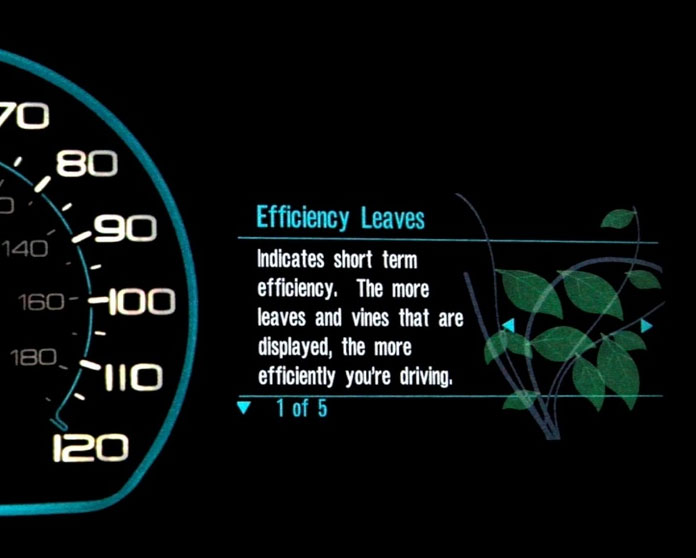
This video was my second exposure to the concept of gamification, after reading Jane McGonnigal's "Reality is Broken." The more I hear, and the more I think about the more convinced I am in the power of gamification. It is such an inspired idea to design the world around us to take advantage of the motivating power of games. For example, the video explains the Ford "EcoGuide" built into the dash of Ford hybrids, featuring a vine which grows when the car is driven in a way that conserves gasoline and shrinks when it is driven more aggressively.

The video also discusses a game called "Speed Camera Lottery," in which speed cameras do not only detect speeders and send them tickets, they also keep track of drivers who pass going under the speed limit. Speeders receive tickets, while everyone else is entered into a lottery to win the ticket fees. The psychology of games, as well as the partial reinforcement effect combine to make this method highly effective, dropping the average speed by 20% in areas where such speed cameras are installed. I was very intrigued by this concept because it so clearly shows what effective tools product and system design can be for social engineering.

Wednesday, November 23, 2011

Mosaic


The second half of my high school crafts class was spent on mosaics. I decided to try to copy a photo that I took in Wyoming the year before:
I started planning the layout on a sheet of masking tape, so that I could lay out all of the pieces that I wanted to use without worrying about any getting lost.
I then had less than an hour to transfer all of the pieces into a clay tablet before it began to harden.

Copper Jewelry Box


The first half of my high school crafts class was about patterns, shapes and metalwork. We first started by creating five shapes, and combining them into as many patterns as we could think of.
Once I chose a pattern, I decided that I wanted to use it in a small metal box. The sides of the box would fold up, and the lid would open and close on a makeshift hinge. A manilla mock-up was made before I was allowed to start on the metal, but I don't have any photos of it.
The bottom of the box and the hinge for the lid
The lid and pattern (tracing paper rubber-cemented to the metal)
The finished product


Monday, November 21, 2011

AP Physics Design Project: Vertical Axis Turbine

The capstone of my high school engineering class was a design project. In teams, we were responsible for designing and building a project, but it could be anything we liked. There were several catapults and trebuchets, a go-kart, and in the case of my team, a wind turbine. As can be seen in the photo above, my friend and I designed and prototyped many different designs before choosing one.


Our first challenge was to turn a microphone stand into a support structure. For our initial plan to create a horizontal axis wind turbine, this support consisted of PVC pipes and an elbow. A small dc-motor was then mounted inside of the pipe to generate power from the rotation of a central hub. We made two different types of blades, flat balsa wood blades, and curved pvc blades. Neither provided a fast enough rotational velocity to generate enough power without gearing, so we settled on a vertical-axis design that would allow us to use a smaller radius turbine.

Sunday, November 20, 2011

Joanna Blakely: Lessons from Fashion's Free Culture


In this TEDTalk, Johanna Blakely discusses the effect that the lack of copyright protection has had on the fashion industry. As "utilitarian" objects, clothing designs are not eligible for copyright in the US. Only brand logos are protected by law, so it is completely legal for counterfeiters to reproduce a design. While it is commonly believed that without ownership, their is no incentive to innovate, Johanna Blakely makes the opposite argument. Not only is there incentive to innovate, there is an increased incentive to innovate faster. It becomes necessary to stay ahead of the counterfeiters, and to design in a way that makes a product particularly difficult to copy. Designers strive to create designs as part of a certain aesthetic each season; these designs work best within this aesthetic. This is very similar to the world of comedy: jokes cannot be copyrighted, so comedians create an onstage persona to deliver their jokes- jokes that would not be as funny outside of this context.
All of this reminded me about the discussion of soft-soap dispensers during class. Copying is going to occur with copyright or patent protection of without, and in most cases litigation will not be the answer. Designers need to rely on ingenuity as much or more than they can rely on the law.

Sunday, November 13, 2011

A Very Potter Musical, A Very Potter Sequel


This is a fan-created Harry Potter musical put on at the University of Michigan a few years ago. Simultaneously a parody and a loving tribute it shows the potential and impact of remix culture better than anything else I know. This is the sort of thing that can only be created in a world with cognitive surplus and technologies that allow anyone to create and distribute content.