Wednesday, November 9, 2011

"Through The Viewfinder" Apparatus


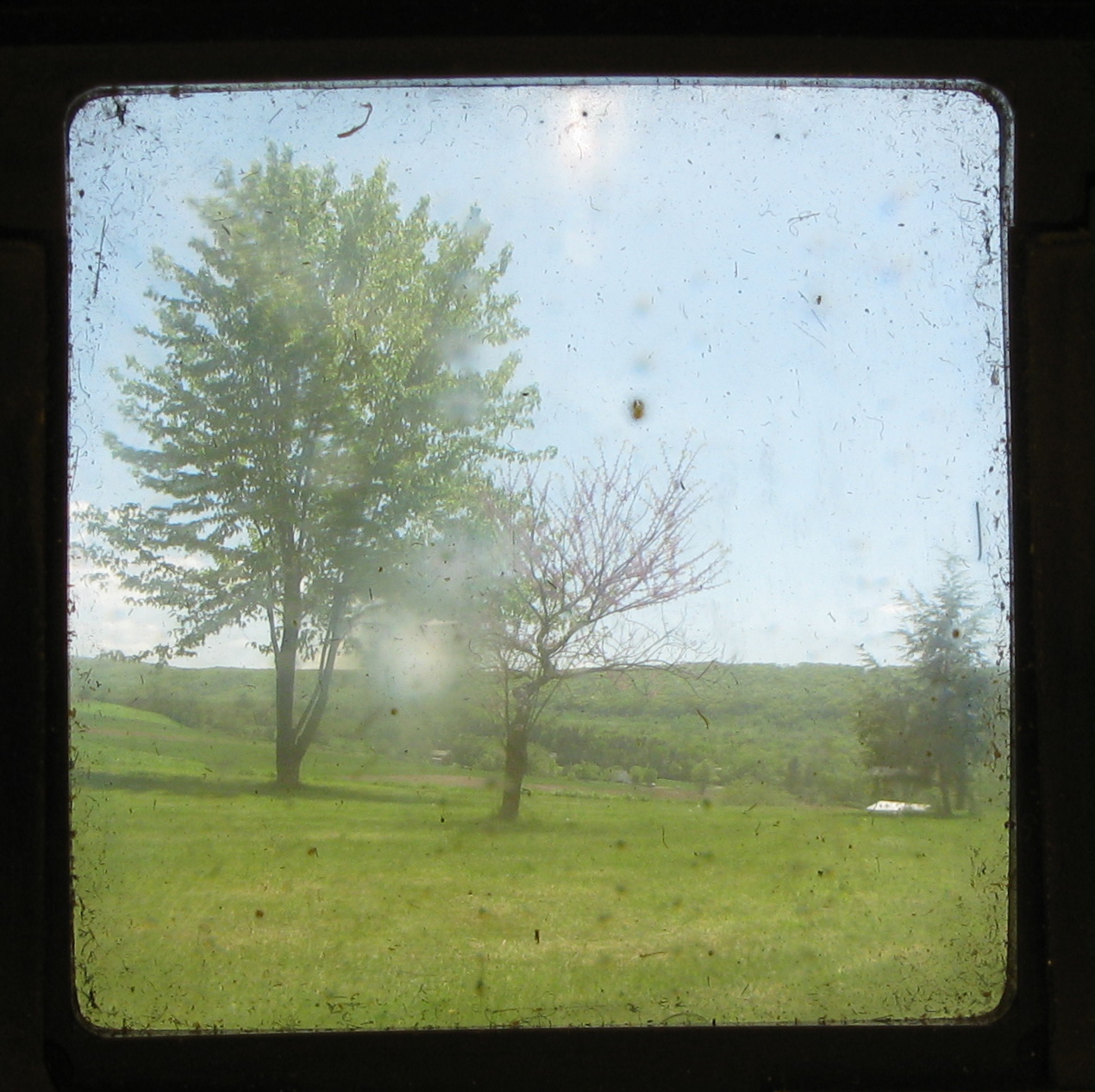
"Through the Viewfinder" is a photographic technique that uses two cameras (a modern digital camera with manual focus and an old twin-lens reflex camera) to take images with vignetting and distortions.
The Kodak Brownie Reflex: a vintage twin-lens reflex camera

The vintage camera is aimed at the subject, and the digital camera is used to capture the scene through the viewfinder of the old camera. About 1.5 feet is required between the cameras, and it must be completely dark in between them, so that the only light that the digital camera senses comes from the viewfinder. As so many different vintage cameras are used with so many different digital cameras, it is necessary to design and build a special apparatus for each particular combination of cameras.
I designed two different styles, for use in different situations. One made of rigid cardboard, for when I don't need to worry about carrying it, and another made of opaque polypropylene, for when I can't carry much or will be near water.

The cardboard design was the most difficult to get right, as my camera (a Kodak Brownie Reflex) has a complicated shape.


A raw photo taken through the cardboard apparatus

The polypropylene design (at home, so I can't take a picture of it) has an elastic seam on either end (made from rubber bands) that ensures a good seal around both cameras. The flexibilty of the polypropylene comes at the expense of being very difficult to use, as it will often bend and obscure the viewfinder, and both cameras need to be individually supported.


Radiolab: Me, Myself, and Muse


http://www.radiolab.org/2011/mar/08/me-myself-and-muse/

The episode of Radiolab that this segment is taken from is all about making deals with yourself. In the clip above, Jad and Robert talk to psychologist Oliver Sacks and author Elizabeth Gilbert about their struggles with the creative process.
Oliver Sachs discusses a time when he was working on a book and was having a terrible time with writers' block. In keeping with the theme of the episode, he solved the problem by making an unimaginable bargain with himself: If he didn't finish in ten days, he would commit suicide. Though he is unable to say whether or not he would have actually gone through with it, this literal "deadline" as he describes it, created a powerful imagined threat that got him writing, first out of necessity then out of a creative well he had not known existed. He describes a "wonderful associative engine" in his head that made writing the book feel like taking dictation. This story was shocking but humorous and well-worthwhile look taking desperate measures to encourage creativity. It found an analog in the way one of my friends described her creative process- purposefully leaving projects until the last possible moment so that she has no chance to second-guess herself.

Next, Elizabeth Gilbert talked about her attempts to "live a lifetime of creativity without cutting your ear off." She described the anxiety she felt when working on a book to follow "Eat, Pray, Love" and her fears that she would never be able to surpass her first novel. She recounts interviewing Tom Waits who believed that there were different ways songs came into the world: "songs you have to sneak up on like hunting for a rare bird," "songs you find little bits of like pieces of gum under a desk," "songs that need to be bullied" This was the first time that she had ever thought of inspiration as an it, something that can be distanced from oneself and negotiated with. This is a radically different view of creativity than the prevailing wisdom, and was a neat idea to toy with.
get distance from it, negotiate with it


Swingline Compact Stand-up Stapler

Although I own this stapler in a somewhat more subdued black and grey, it is a joy to use. I believe it is well-designed because
  • It can stand on one end to reduce the amount of space it takes up on your desk.
  • It is solidly built, heavy enough to feel substantial and sturdy enough to get through more sheets of paper than it would appear capable of.
  • A gauge on the back of the stapler indicates roughly how many staples are left so it is easy to see that it is getting low.
  • The rubber, ergonomic grip on the bottom makes one-handed stapling easy.

Radiolab

Radiolab has taught me about the power of designing experiences. Every segment is carefully edited and produced to bring the audience along on an adventure. It is hard to describe, but the sound design adds an entire dimension to the interviews and dialog and adds so much more than just music or traditional sound effects. The breathtaking attention to detail on the show results in a listener experience unlike any radio show I've ever heard.


Cities


The Good Show

Lost and Found

Desperately Seeking Symmetry

James Gurney: The Idea Monster


"Instead of just doing a straight architectural portrait, I wanted to come up with a clever idea for a fantastical sketch. But my mind went blank, as if some monster robbed all the good ideas out of my head. Then I thought: What if there actually was an Idea Monster that stole good ideas? It would sit blocking the road, and kidnap all the fresh, original ideas that came rolling along. It would let through only the stale, tired old clichés."
http://gurneyjourney.blogspot.com/2011/11/idea-monster.html

James Gurney is an artist whom I have admired since I read the book Dinotopia in elementary school- his illustrations are incredibly beautiful. I just learned this fall that he keeps a blog where he posts sketches and watercolors, and have been following it through my RSS reader ever since. In early November, he posted the image and the quote above, which I thought was a charming way to think about that moment when a great idea is on the very tip of your tongue, and then is snatched away at the crucial moment, or those days when, try as you might, only boring ideas seem to come.

Janet Echelman: Taking Imagination Seriously


There were many different elements of this video that coincided with design topics that I am interested in. The first was the idea of limitations leading to innovation. Janet Echelman was in India on a Fulbright scholarship and was supposed to hold an exhibition, but her paints never arrived. She was forced to try a different medium, and as the village she was in was had a large population of fishermen, she was inspired to try to create sculptures out of fishnet. Fishnet is now her primary medium, and she has created massive sculptures for cities all over the world.


Another element of the speech that I found very interesting was her description on the fusion of traditional crafts and technology and engineering that is needed to create each sculpture. These enoromous figures needed to be modelled before they could be constructed, and special computer simulation programs had to be created in order to bring these wonderful, organic shapes to realization.


I also was very interested in what she had to say about designing for nature. Most of her sculptures are outdoors and exposed to the elements, so wind is an important consideration in each design. Response to wind is modelled for each new sculpture, so that the wind can be used to animate the netting, causing fluid motion.


Poke the Box by Seth Godin

Poke the Box was a very short book, but it once again came back the many of themes explored by Sir Ken Robinson. It talks about how the only way to make a difference or to do something great is to take a risk- to poke the box and see what happens. It encourages readers to take the initiative to stand up for their ideas and move forward, working against the desire not to take risks that has been instilled in everyone since childhood. This is an important message that I struggle with, so I use this book as a sort of self-help: tiny doses of inspiration and encouragement when I need them.